A House in Madeira: The Dream Home Is Here—But Is It Right for You?
A week’s vacation in Madeira—sun, sea, flowers everywhere. And then you see this house with a view of the sea and think: I want to stay here. I know that feeling well. I’ve been living on the island for five years, and I know many people who’ve moved here and haven’t regretted it. To make sure your dream holds up in everyday life, it’s worth keeping a few things in mind before you buy. Not to scare you, but so you’ll be happy later on.
The Climate: Mild, but Not the Same Everywhere
Madeira has a mild, subtropical climate, and that’s exactly what so many people love about it. In Funchal, on the south coast, daily highs in January average around 19 degrees, according to the weather website wetter.com, while nighttime lows average around 13 degrees. In August, daytime temperatures average around 26 degrees and nighttime lows around 19 degrees. In the summer, it hardly ever rains in the south; most of the rain falls in the winter, with an average of about 100 millimeters in January. Humidity hovers around 70 percent year-round.
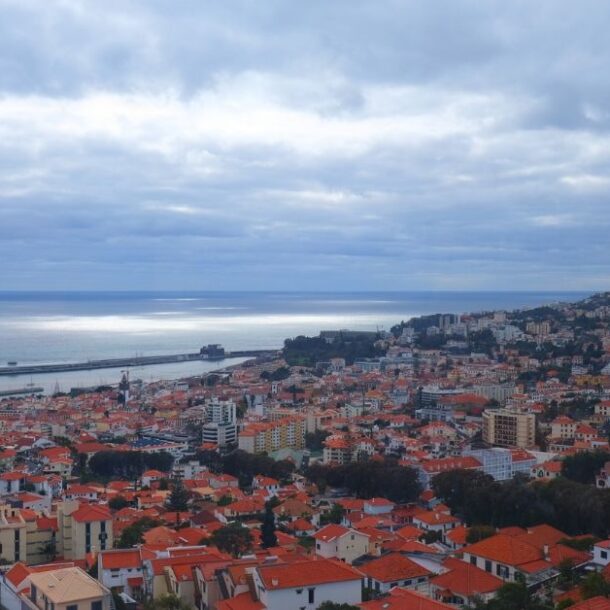
The island is only about 55 kilometers long, but the weather varies greatly depending on which side you’re on and the elevation. The south is usually sunnier and drier, while the north is greener and rainier. And the higher up you live, the cooler and more changeable the weather becomes. You’ll notice a clear difference starting at an elevation of about 500 meters, though conditions can vary from day to day. The house you saw at 500 meters on a sunny vacation day might look completely different on another day: cooler, windier, perhaps shrouded in clouds, and the view that won you over might simply be gone.

Down in the village, the sky is clear, but up above, clouds hang over the mountain peaks. Anyone living up here has no view in this kind of weather. On Madeira, the weather can change completely within just a few kilometers and a few meters of elevation.
You live differently in the summer and in the winter
Many homes in Madeira don’t have heating. In the summer, you hardly notice it, but in the winter you’ll feel the difference—especially at higher elevations. That’s why it makes sense to view a house not just once, but—if possible—during two different seasons, or to plan a winter stay. Then you’ll know what your new home really feels like. And it’ll show you whether you’d prefer to live in the sunny south or higher up in the mountains.
Uphill, Downhill: Paths in Everyday Life

In Madeira, almost everywhere is either uphill or downhill. Google might tell you that a pharmacy or restaurant is 15 minutes away. But it makes a difference whether you’re walking downhill there or uphill back. So drive down the street to the house yourself, check out the parking lot, and count the stairs. An elevator can also make a big difference in everyday life, especially when you think about the future.
Good tradespeople need time to prepare
There’s a lot going on in Madeira right now, and many people are buying and renovating homes. That’s why good contractors are hard to find; some even say they’re booked up for up to two years. If you want to do some work on your house, ask about availability early and plan ahead.
Prices: Not the Same Everywhere
Prices vary greatly depending on location. According to data from the INE, the median sales price in the Madeira region was most recently around €2,578 per square meter, and in Funchal around €3,601 (source). Prices may differ in the north or in higher-altitude areas. Furthermore, the price listed in an ad is not necessarily the price at which the property is ultimately sold.
The NIF: Nothing Works Without It
When buying a home in Portugal, you’ll need a NIF (Número de Identificação Fiscal), which is the Portuguese tax ID number. You can obtain it from the tax office (Serviço de Finanças) and can usually apply for it even before you move. According to MCS, people from EU and EEA countries do not need a representative for this, but those living abroad can also have it handled by an authorized representative. For buyers from non-EU countries, a tax representative may be required once they own property in Portugal. It’s best to clarify this early on with a lawyer or tax advisor so that the purchase isn’t held up.
Frequently Asked Questions
Do I need a NIF to buy a house? Yes, the Portuguese tax ID number is required for the purchase, and it’s best to apply for it early.
When’s the best time to view a property? If possible, twice—in the summer and in the winter—or plan a winter stay.
Is the south better than the north? The south is sunnier and drier, while the north is greener and quieter. Either one could be right for you—it depends on your preferences.
As a buyer from abroad, do I have to pay more taxes? According to several sources, a flat IMT rate of 7.5 percent has been in effect since 2026 if you are not a tax resident of Portugal, with some exceptions. Be sure to seek advice before making a purchase.
Conclusion
Madeira is a wonderful place to live, but not every house is right for everyone. If you think through the location, elevation, access routes, and seasons beforehand, you’ll find a home that makes you happy in your everyday life.
Feel free to contact me

Are you thinking about buying a house in Madeira, or do you have some questions first? I’m a real estate agent at Keller Williams Madeira, and I’d be happy to help you. Send me a message—I’d love to guide you through the first steps, at your own pace and without any pressure.
This post is also available in: German